Jitendra Malik, Berkeley professor and part-time research science director at Meta, talks with Peter on The Robot Brains Podcast about sensorimotor learning, robotics, computer vision, and how AI research develops.
Yaniv Altshuler, founder of Meta AI, discusses using AI to match feed additives to dairy herds and reduce methane emissions on The Robot Brains Podcast with the host.
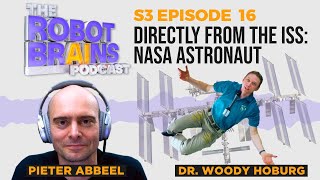
NASA astronaut and SpaceX Crew-6 pilot Woody Hoburg talks with Robot Brains Podcast host Dr. Peter Abbeel about life and research aboard the International Space Station.
Rocky Duan, co-founder and CTO of Covariant, discusses robotic automation, foundation models, and learning systems with host Peter Chen on The Robot Brains Podcast.
Raffaello D’Andrea, Verity co-founder and ETH Zurich professor, tells The Robot Brains Podcast’s Peter about autonomous warehouse drones, Kiva Systems, and his research and creative work.
Geoffrey Hinton, AI researcher and former Google employee, talks with host Pieter Abbeel on The Robot Brains Podcast about AI’s growing capabilities, risks, potential benefits, and his decision to leave Google.
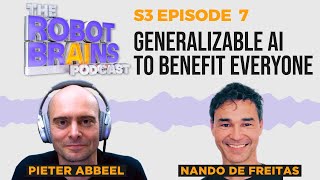
Nando de Freitas, research director at DeepMind, talks with Pieter Abbeel on The Robot Brains Podcast about making AI useful and accessible worldwide, generalist agents, robotics, and future research.
On The Robot Brains Podcast, host and AI researcher Andrew Ng talks with Richard Socher, AI researcher, entrepreneur, and You.com founder, about building an AI-powered search engine, his research and startup career, and where AI may go next.
Cohere co-founder and CEO Aidan Gomez discusses language models, instructable agents, and building an AI company with Peter on The Robot Brains Podcast.
Scale AI founder and CEO Alexandr Wang talks with Peter on The Robot Brains Podcast about data, building AI businesses, foundation models, and AI’s uses in industry and national security.
Stanford AI and robotics professor Chelsea Finn talks with host Peter on The Robot Brains Podcast about helping AI systems adapt to changing conditions, with examples from language models and robots.
Briefs summarise talks and interviews; timestamps open the video at that moment. Claims in a talk are the speaker's own.