Students describe how the Innovation Lab helped them build robots, learn programming, and pursue interests in engineering and AI. Maxime says his lab experience led to an internship at Ekso Bionics, while Jun describes designing an aquaponics system and preparing to study architectural engineering at Cal Poly San Luis Obispo.
Khatib demonstrates a remotely operated underwater robot that follows a human operator’s hand movements and can collect samples. Haptic controls send contact forces back to the operator, helping them sense objects and guide the robot through difficult tasks. He connects this work to exploring the ocean depths that divers cannot safely reach.
Khatib describes applications in underwater archaeology, mining, oil infrastructure, and areas affected by radiation, where robots can work while people guide them remotely. He also discusses exoskeletons and other systems that support physical work or recovery, along with interfaces that help experts direct machines.
Khatib argues that programming every movement works poorly in homes and other changing environments. His lab studies human skills and contact forces so robots can learn tasks such as fitting a cap onto bottles of different sizes and orientations. He describes compliant robots and whole-body control as ways to move and interact more safely.
Khatib recounts testing OceanOne at increasing depths before sending it to 200 meters. During the mission, sediment obscured its cameras and the robot became trapped between two cannons; operators freed it by pushing against the surrounding walls through the haptic controls. The robot later brought an archaeological object to the surface without damaging it, and the team began developing a version designed for 1,000-meter dives.
Briefs summarise talks and interviews; timestamps open the video at that moment. Claims in a talk are the speaker's own.
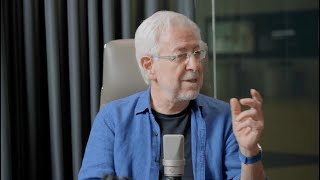
Professor Oussama Khatib, a Stanford robotics researcher and advisor to the Technology Innovation Institute, discusses practical robotics and AI with host Amandeep on ATRC’s AI to Eye podcast.
Professor Oussama Khatib of Stanford University discusses human-robot collaboration, from compliant manipulation and whole-body control to OceanOne’s underwater archaeology work, with the MIRMI robotics community in Munich.
Oussama Khatib, a robotics researcher at Stanford, discusses human-guided robots, dexterous manipulation, and OceanOne at the TUM Robotics Symposium in Munich.
Dr. Oussama Khatib, director of Stanford’s Robotics Lab, discusses human-robot collaboration, safe robot design, and applications ranging from deep-sea exploration to caregiving at KAUST’s Winter Enrichment Program with host Nick.
Prof. Oussama Khatib, a robotics researcher at Stanford, explains how human guided robotics can help people explore and work in dangerous environments, focusing on OceanOne’s underwater archaeology mission in the Mediterranean.
Oussama Khatib, a robotics researcher at Stanford, discusses human-robot interaction and mobile manipulation at a Berkeley robotics event with CITRIS and the Banatao Institute.