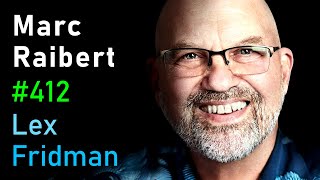
Marc Raibert, robotics researcher and founder of the AI Institute, discusses Boston Dynamics’ robots and the research culture he wants to build at the IROS 35th Anniversary Forum.
Raibert describes Spot as a general platform, Stretch as a machine designed for box handling, and Atlas as a testbed for exploring future capabilities. He says Spot is used for inspections and construction surveys, including radiation measurements at Fukushima. He reports nearly 900 Spots in use worldwide, with about 130 at academic institutions.
Stretch targets the handling of cases in warehouses, a physically demanding job where employers struggle with turnover. Raibert traces its design back through Handle to Atlas and says customer pilots are underway. Atlas uses dynamic control and vision to adjust planned movements; he describes its control work as combining model predictive control, learned or practiced behaviors, perception, and engineering analysis.
Raibert argues that robotics advances when software, hardware, and physics are developed together. He says he started the AI Institute to pursue cognitive capabilities such as situational understanding, learning by watching, planning, and communication. Its research model aims to combine academic openness and long horizons with the teamwork and engineering depth of a corporate lab.
Raibert names ambition, diligence, persistence, and technical enjoyment as qualities he wants in robotics research. He illustrates diligence with robots continuing after disturbances, such as a shifted box or a pull on a rope. In the discussion, he says static or dynamic methods should fit the task, and that useful learning systems should be judged by whether they accomplish the intended job.
Humanoids, collaboration, and public understanding
Raibert says robot form should follow the application, while noting that humanoids attract greater public attention. He describes early work on making Spot’s actions clearer to people and says intimate physical assistance will require safer robots, better communication, and stronger cognitive abilities. He also supports public discussion of robotics risks and opportunities through an ethics and policy group at the AI Institute.
Briefs summarise talks and interviews; timestamps open the video at that moment. Claims in a talk are the speaker's own.
Marc Raibert, founder of Boston Dynamics and executive director of the Boston Dynamics AI Institute, talks with Lex Fridman on the Lex Fridman Podcast about legged robotics, robot intelligence, and the work ahead.
A Boston Dynamics Prototype Operations team member explains how the company builds and improves Atlas, from precision machining through assembly and testing, alongside its engineers.
Boston Dynamics’ robotics team discusses Atlas’s path to industrial work at Hyundai Motor Group’s Robotics Metaplant Application Center, with a host visiting the facility.
The Atlas Director of Robot Behavior at Boston Dynamics talks with NEXT host John Koetsier about Atlas’s design, robot intelligence, factory integration, and why legs can suit industrial work.
Chris Thorn, Atlas hardware team lead at Boston Dynamics, discusses the new Atlas design with industrial designers Aaron Abroff and James Kucera at Boston Dynamics.