Zoom Vantage· Jun 21, 2025
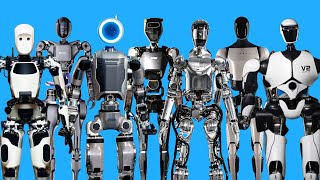
NVIDIA Powered Humanoid Robots Unveiled at NVIDIA GTC Paris VivaTech 2025
Jensen Huang, NVIDIA CEO, discusses how NVIDIA computing and AI can support humanoid robot development at GTC Paris during VivaTech 2025.
Suzanne Gildert, CTO of Sanctuary AI, discusses embodied intelligence, Phoenix’s dexterous hands and training approach, and the company’s plans for deployment with Brighter with Herbert host Herbert and guest Scott Walter.
Gildert sees robotics as a way to study how minds work, since human intelligence developed in bodies that move and interact with the world. She argues a humanlike body is especially important for developing humanlike intelligence, because touch, movement, and handling objects shape how people understand their surroundings.
Phoenix is Sanctuary AI’s sixth-generation humanoid, with about 60 degrees of freedom and a focus on dexterous bench work. Its Carbon control system supports teleoperation for collecting demonstrations, then single-purpose or multipurpose AI modes. Rather than train only on complete jobs, Sanctuary is building a library of reusable actions such as grasping, turning, and placing objects.
Phoenix’s hands have 16 degrees of freedom apiece, fingertip haptic sensors, and visual feedback that helps estimate finger positions. Gildert describes combining sight and touch as an open research question, while teleoperation with HaptX gloves gives pilots force and tactile feedback. She says Sanctuary is gathering demonstrations and simulated examples to improve its models and narrow the sim-to-real gap.
Gildert identifies retail and manufacturing as areas of customer interest and says early deployments will likely involve small proof-of-concept orders. She cautions against mass-producing robots before AI generalizes, and points to simulation as a way to test systems before scaling hardware. She predicts millions of humanoid robots by 2030, while arguing that early use could address hard-to-fill and dangerous jobs.
Gildert says she is exploring whether quantum computing might relate to consciousness, while stressing that the idea is speculative. She believes imitation learning can carry human values through demonstrations, and argues that people and institutions should shape those examples. She also imagines robots supporting work beyond today’s labor needs, including running experiments in biomedical labs.
Briefs summarise talks and interviews; timestamps open the video at that moment. Claims in a talk are the speaker's own.
Jensen Huang, NVIDIA CEO, discusses how NVIDIA computing and AI can support humanoid robot development at GTC Paris during VivaTech 2025.
AI Search host discusses the humanoid robot race, comparing companies’ capabilities, demonstrations, and progress toward real-world deployment.
Geordie Rose, co-founder and CEO of Sanctuary AI, discusses humanoid robot autonomy, dexterous hands, and the economic and philosophical questions around automation with Jason on This Week in Startups.
Geordie Rose, co-founder and CEO of Sanctuary AI, discusses the company’s Phoenix humanoid robot, its AI and hardware strategy, and its early commercial applications with John Koetsier on NEXT’s TechFirst.
Suzanne Gildert, CTO of Sanctuary AI, discusses the company’s humanoid robot and its path toward general-purpose work with a Bloomberg Originals host in Vancouver.
Jeremy Fishel, principal scientist and researcher at Sanctuary AI, discusses dexterous hands and tactile sensing with Jeff Rick at the Humanoids Summit in Mountain View, California.