Suzanne Gildert, CTO of Sanctuary AI, discusses the company’s humanoid robot and its path toward general-purpose work with a Bloomberg Originals host in Vancouver.
Gildert describes the robot as a humanoid system intended to handle work tasks. Unlike industrial machines designed for fixed routines, it aims to map its surroundings and take on different tasks. Its fourth-generation hands use pressure sensors to provide touch feedback to the software and human pilot.
Eric operates the robot through a VR headset with stereo camera views, while sensors relay touch information to him. Gildert says pilot control provides human-like training data for improving the software and AI. The robot’s arms use force control, allowing them to yield when pushed beyond a set limit.
Gildert argues that moving objects and keeping track of them are easy for people but difficult for computers, and says these skills could apply to retail or assembly work. She estimates that 95% of jobs require finger dexterity that conventional robots lack. She frames the target as unfilled roles, citing more than 11 million vacancies in the US, and envisions pilots overseeing groups of robots.
The team trains virtual hands to pick up chess pieces through repeated attempts, using simulations that can run thousands or hundreds of thousands of hands faster than real time. Gildert says the physics engine must model details such as fingertip contact, and that simulated grasping is being combined with whole-body motion planning. She sees potential to transfer the approach to tasks such as arranging restaurant cutlery, while acknowledging that simulation and reality still differ.
The robot builds a mental model of its surroundings
Gildert compares a simulated model of the outside world with the robot’s own evolving picture of it. When the robot looks down at the chessboard, it detects the pieces and builds an understanding of their positions; when its hand blocks them, they disappear from its current model. The longer-term aim is for a robot to enter a room and identify objects and locations as it looks around. Gildert says a fully autonomous robot could behave much as it does under Eric’s control, but without a person in the VR suit.
Briefs summarise talks and interviews; timestamps open the video at that moment. Claims in a talk are the speaker's own.
Jeremy Fishel, principal scientist and researcher at Sanctuary AI, discusses dexterous hands and tactile sensing with Jeff Rick at the Humanoids Summit in Mountain View, California.
Geordie Rose, co-founder and CEO of Sanctuary AI, discusses humanoid robot autonomy, dexterous hands, and the economic and philosophical questions around automation with Jason on This Week in Startups.
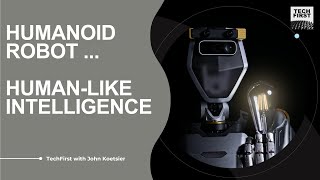
Geordie Rose, co-founder and CEO of Sanctuary AI, discusses the company’s Phoenix humanoid robot, its AI and hardware strategy, and its early commercial applications with John Koetsier on NEXT’s TechFirst.
Geordie Rose, CEO of Sanctuary AI and founder of D-Wave and Kindred AI, discusses language models, minds and consciousness, quantum computing, and building general-purpose humanoid robots with Alex Conconi.