Rice University robotics researcher Lydia Kavraki and NYU Center for Data Science cognitive scientist Angela Radulescu discuss robot motion planning and active data collection, alongside human attention and decision-making, at a Data Science Coast to Coast Seminar hosted by seven university data science institutes.
Kavraki describes a robot as an embodied system that senses its surroundings, reasons about them, plans, and acts. Examples include mapping a building with a laser rangefinder and reconstructing a room from an RGB-D sensor’s point cloud. Robots can also gather ongoing measurements such as temperature, noise, air quality, and Wi-Fi strength, then seek out missing information themselves.
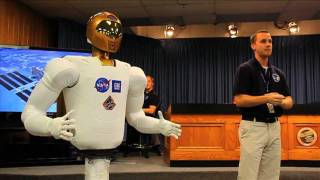
Kavraki explains how sampling-based planners explore possible robot positions and connect them into roadmaps or trees, balancing exploration with efficient paths. Her group worked with Eduard Vidal’s team at ICM in Spain on an underwater vehicle planner that adapts as sonar reveals obstacles while respecting dynamics and safety constraints. For NASA’s Robonaut, the team planned constrained movements for tasks such as retrieving cargo bags and pushing a station door.
Kavraki describes storing noisy task data so a robot can retrieve useful experience and plan faster when it encounters similar work. In one example, a robot moves cans into a bin and pushes it based on a high-level mission, without exact object positions or a fixed action order. When a person removes a block from an arch the robot is building, the robot must recognize the disruption and recover the task.
Radulescu studies how people represent tasks in natural settings and how those processes may inform mental health research. In a repeated-choice study, eye tracking and neuroscience-based measures showed that attention affected both participants’ choices and how they learned from feedback; gaze patterns fit an inference account better than gradual trial-and-error learning. In virtual reality, participants found targets in cluttered rooms 75% of the time, and models using object color and shape produced search patterns similar to people’s.
Radulescu describes models in which mood tracks recent differences between expected and received rewards. Simulations showed that attention to different features can change modeled mood even when outcomes stay the same, and an experiment found that happy and sad moods biased attention toward positive and negative expectations, respectively. She sees potential for closed-loop therapies that guide attention toward features associated with healthier mood.
Briefs summarise talks and interviews; timestamps open the video at that moment. Claims in a talk are the speaker's own.
Dr. Brad Ambrose, former NASA humanoid robotics team lead and chairman of robotics at Alliant, discusses humanoid design, commercial potential, and U.S.–China competition with John Koetsier on NEXT.
Nicolaus Radford, founder and CEO of Nauticus Robotics, describes his move from NASA space robotics to autonomous underwater work at an IHMC lecture in Pensacola.
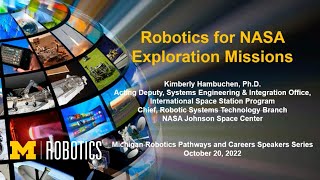
Kimberly Hambuchen, a NASA Johnson Space Center robotics engineer and former chief of its Robotic Systems Technology Branch, describes her career path and work on space robotics, with Chad Jenkins hosting at the University of Michigan.
Rhonda Flirt, a NASA Johnson Space Center presenter, demonstrates Robonaut 2 with colleague Julia Badger, explaining how the humanoid robot works alongside people in space and on Earth.