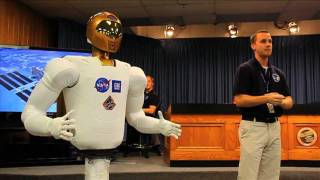
Dr. Brad Ambrose, former NASA humanoid robotics team lead and chairman of robotics at Alliant, discusses humanoid design, commercial potential, and U.S.–China competition with John Koetsier on NEXT.
Ambrose led three generations of NASA robot teams and says iterative design helped them keep pace with fast-changing technology. Robonaut was designed to use tools and interfaces already made for astronauts, including spacewalking equipment. Later versions explored different bases, autonomy, and ways to work safely near people, including through NASA’s collaboration with General Motors.
Ambrose separates the upper body, which does the work, from the lower body, which positions it. Human-shaped robots can operate in spaces designed for people, while wheels or specialized forms may suit other tasks better. He gives the example of a four-wheeled Robonaut configuration that paired dexterous hands with a bulldozer blade.
Ambrose expects more robots as robotics advances in uneven leaps, citing autonomous vehicles, drones, and recent progress in bipedal movement. Walking can bring a robot’s hands into places that wheels cannot easily reach, such as inside a car. He argues that falling prices, greater reliability, and software that supports more tasks could make robots valuable to ordinary households as well as factories.
Koetsier and Ambrose discuss how robotics leadership could shape industrial power, drawing a parallel with the automobile industry’s role in U.S. growth. Ambrose recalls concern in the 2000s that the U.S. would lose robotics leadership to Japan, and describes the National Robotics Initiative as a way to support research, education, and startups. He argues that the U.S. needs to pair entrepreneurship with domestic manufacturing capacity, while investing in workforce and talent.
Ambrose favors government support for robotics skills and talent, and suggests tax incentives could help companies purchase and deploy robots. He pushes back on claims that robots will inevitably take all jobs, pointing instead to a period of low unemployment. The excerpt ends before he completes that point.
Briefs summarise talks and interviews; timestamps open the video at that moment. Claims in a talk are the speaker's own.
Nicolaus Radford, founder and CEO of Nauticus Robotics, describes his move from NASA space robotics to autonomous underwater work at an IHMC lecture in Pensacola.
Rhonda Flirt, a NASA Johnson Space Center presenter, demonstrates Robonaut 2 with colleague Julia Badger, explaining how the humanoid robot works alongside people in space and on Earth.
Rob Ambrose, acting chief of Johnson Space Center’s Automation, Simulation and Robotics Division, describes Robonaut 2’s design, safety systems, planned ISS experiments, and possible future roles alongside astronauts.