Olivia Norton, co-founder and head of product and engineering at Sanctuary AI, talks with Jordy Rose about embodied intelligence, her work at Kindred and Sanctuary, and how to turn long-term robotics goals into practical product steps.
Norton joined Kindred after meeting Rose at a University of British Columbia course in 2014. She began by translating between technical teams and lawyers, preparing patent disclosures and claims, then moved into technology work to study how intelligence operates in physical systems. She says Kindred’s IP portfolio later played a part in the company’s 2019 acquisition.
At Kindred, Norton worked on cognitive architectures for robots of different sizes, from small machines to human-sized ones. She came to see cognition and physical form as closely linked: a robot’s body shapes the problems its control system can handle. She sees newer technology as making it more feasible to bridge several kinds of embodiment, though a fully general control system remains a longer-term goal.
Norton says Sanctuary offered a chance to apply Kindred’s lessons toward a human-like intelligent system. Kindred focused on e-commerce fulfillment, where a robot picked items from bins around an arm; Norton describes that as economically useful but tailored to one task. Sanctuary’s goal was a platform with a wider range of physical and cognitive capabilities, so its underlying intelligence could keep developing.
Norton stays close to research and development by talking with teams about progress and obstacles, while also working with customers and partners. She expects adoption to grow in phases: start with concrete capabilities, such as work in automotive operations, then extend those skills to other industries as the technology advances. She says roadmap choices should account for where an initial use case can transfer next.
Norton says cross-functional work suits her curiosity because it brings many fields and experiences together. Rose describes seeing a robot walk using newly deployed algorithms as a striking example of how quickly robotics has changed compared with an older bipedal robot at Kindred. Norton adds that working beside robots has become an ordinary part of the job.
Briefs summarise talks and interviews; timestamps open the video at that moment. Claims in a talk are the speaker's own.
Jeremy Fishel, principal scientist and researcher at Sanctuary AI, discusses dexterous hands and tactile sensing with Jeff Rick at the Humanoids Summit in Mountain View, California.
Suzanne Gildert, CTO of Sanctuary AI, discusses embodied intelligence, Phoenix’s dexterous hands and training approach, and the company’s plans for deployment with Brighter with Herbert host Herbert and guest Scott Walter.
Geordie Rose, co-founder and CEO of Sanctuary AI, discusses humanoid robot autonomy, dexterous hands, and the economic and philosophical questions around automation with Jason on This Week in Startups.
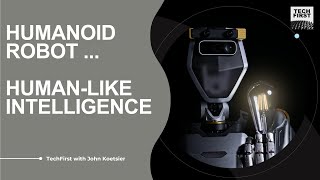
Geordie Rose, co-founder and CEO of Sanctuary AI, discusses the company’s Phoenix humanoid robot, its AI and hardware strategy, and its early commercial applications with John Koetsier on NEXT’s TechFirst.