David Reger, CEO and founder of NEURA Robotics, talks with John Koetsier on NEXT about the 4NE-1 humanoid, the company’s technology and plans for European robotics.
A general-purpose robot with rapid development cycles
Reger describes 4NE-1 as a multipurpose humanoid for work and household tasks. He says the company moved quickly from Gen 1 to Gen 2 and was developing Gen 3, which he expected to release in June 2025. He aims for Gen 3 to outperform other humanoids, including Tesla’s Optimus.
Reger says the main technical challenge is streaming enough sensor data to connect virtual decisions with physical action in real time. NEURA’s approach uses three processing layers: a small model at the sensors for immediate reactions, a larger model on the robot, and cloud access for broader decisions. He gives guiding an electric vehicle plug as an example of a task that requires millisecond responses.
Reger compares NEURA’s strategy to a smartphone platform: the company builds the robot and developer environment while partners create applications. He says robots can learn skilled tasks from experts using sight, sound, and physical feedback, such as the forces involved in welding. He describes labeling and distributing learned skills across robots, and says NEURA sells through major robotics channels rather than directly to customers.
Reger identifies data interfaces, sensing, and actuation as key areas for Gen 3. He describes work on sensor-rich artificial skin that could detect contact and pressure, as well as improved sensors and a new actuator and gearbox design. He says better sensing could help robots move faster around people without relying on cautious, slow motion.
Reger argues that humanoid robots could become widespread by 2030 and says Europe needs to compete in robotics to preserve its industrial role. He sees robots as a way to take on unwanted tasks and help address an aging workforce, while acknowledging that automation will reshape work. He hopes people will decide which tasks AI should handle and which people should continue doing because they value them.
Briefs summarise talks and interviews; timestamps open the video at that moment. Claims in a talk are the speaker's own.
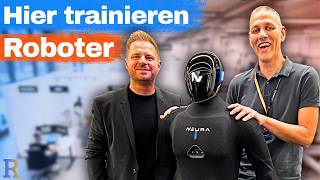
Jens Fischer, host of RoboSphäre, covers the opening of Neura Robotics’ robot training gym at Munich Airport with TUM, including remarks from Neura Robotics CEO David Reger and TUM representatives.
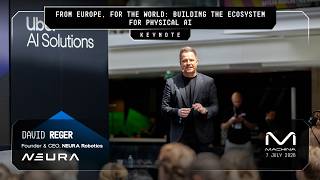
Neura Robotics founder and CEO David Reger explains his vision for physical AI and how the company is building robots, training tools and a shared platform at MACHINA 2026 with Machina Summit.
David Reger, founder and CEO of NEURA Robotics, discusses physical AI, robotics platforms, and open collaboration with John Furrier on SiliconANGLE theCUBE at Machina Summit in Paris.
David Reger, founder and CEO of NEURA Robotics, discusses the company’s humanoid plans, physical AI, industrial uses and how robots may fit alongside human workers with the host of Automation Awakenings at NEURA’s headquarters.