Reger says robotic hands are difficult to build because they must combine compact strength, cooling, dexterity, and tactile sensing. NEURA’s Smart Limb chip handles fast local responses, such as adjusting grip pressure, while a separate computing layer handles higher-level reasoning. He argues that vision-based models alone struggle with physical tasks where objects are hidden or slightly out of place.
Reger says haptic training data is scarce, so NEURA is building Neura Gyms where people teleoperate robots through recorded movements. A gym can contain about 100 cells, and teams can train a task, test it on a robot, then add examples when it fails. Customers can keep data private or share skills through the platform, with shared skills potentially licensed for small per-use fees.
Reger describes NEURA’s time-to-skill measure: training a robot to perform a new task autonomously. He says the company reduced a sheet-metal handling task from roughly 60 to 70 hours of training to 14 hours over three months, and expects further reductions. He points to logistics and machine tending as early industrial uses, while noting that performance still needs improvement on unusual cases.
Reger says NEURA is prioritizing industrial customers, including logistics and factory tasks such as inserting parts and operating machines. He distinguishes a pipeline of more than €10 billion from an order book of nearly €1.5 billion that includes delivery commitments and technical conditions. Rather than selling directly to every end customer, NEURA initially supplied other robotics firms and used minimum quantities and longer commitments to build demand while developing its service network.
Making automation part of Germany’s economic future
Reger connects the company’s work to maintaining Germany’s industrial base and social systems, arguing that automation can help companies create more value and remain competitive. He proposes supporting automation while workers retire, with future robot-related social contributions helping fund the safety net. He also says technology should remain a tool for people and warns against connecting AI directly to human decision-making in ways that could undermine free will.
Briefs summarise talks and interviews; timestamps open the video at that moment. Claims in a talk are the speaker's own.
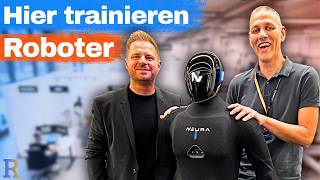
Jens Fischer, host of RoboSphäre, covers the opening of Neura Robotics’ robot training gym at Munich Airport with TUM, including remarks from Neura Robotics CEO David Reger and TUM representatives.
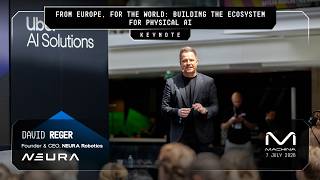
Neura Robotics founder and CEO David Reger explains his vision for physical AI and how the company is building robots, training tools and a shared platform at MACHINA 2026 with Machina Summit.
David Reger, founder and CEO of NEURA Robotics, discusses physical AI, robotics platforms, and open collaboration with John Furrier on SiliconANGLE theCUBE at Machina Summit in Paris.
David Reger, founder and CEO of NEURA Robotics, discusses the company’s humanoid plans, physical AI, industrial uses and how robots may fit alongside human workers with the host of Automation Awakenings at NEURA’s headquarters.
David Reger, CEO and founder of NEURA Robotics, talks with John Koetsier on NEXT about the 4NE-1 humanoid, the company’s technology and plans for European robotics.