LimX Dynamics’ main speaker describes the Shenzhen company’s cognitive operating system for its Oli humanoid and compares its approach with other companies’ efforts to make robots learn and act autonomously.
Zeroth Robotics, a Suzhou startup with $70 million in early funding, introduced three robots: a $2,400 desktop assistant, a $5,000 wheeled model, and the $90,000 Jupiter humanoid. The company says its Zeroth World model helps the robots adjust to everyday environments, and expects shipments to begin around April 2026.
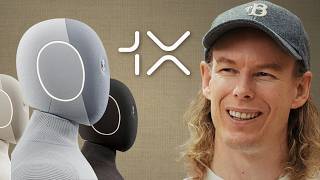
1X says its world model lets Neo generate short predictions of what may happen next, drawing on human video and robot data before a separate system converts predicted movement into motor commands. Reported test success varied by task: nearly 95% for steaming a shirt, 80% for picking up chips, and 75% for opening a sliding door. Neo costs $20,000 to buy or $500 monthly to rent, with early home deployments also collecting data to improve the system.
Skild AI says its OmniBody approach uses human video to infer task intent and adapt it to different robot designs, addressing the fact that video lacks information such as force and touch. The company raised $1.4 billion in a Series C led by SoftBank at a reported valuation above $14 billion, and plans to place robots in settings including warehouses, factories, and data centers.
LimX Dynamics says its system lets humanoids perceive, reason, retain context, and act over time. Its architecture combines goal reasoning, semantic memory, and a whole-body control model for movement and manipulation. The company demonstrated it on its Oli humanoid, which starts at about $22,000.
Mentee Robotics showed a humanoid learning a battery replacement from one human demonstration, then training through simulated variations before transferring the behavior to hardware. In another demonstration, two Gen 3 robots moved 32 boxes from eight uneven piles to warehouse racks without teleoperation. Mobileye agreed to acquire Mentee in a deal reported at about $900 million in cash value, plus shares.
Briefs summarise talks and interviews; timestamps open the video at that moment. Claims in a talk are the speaker's own.
LimX Dynamics R&D head Paul Lee discusses humanoid robotics, locomotion, hardware, teleoperation, and practical use cases with The Humanoid Hub at LimX Dynamics in Shenzhen.
Wei Zhang of LimX Dynamics, a control theorist turned robotics entrepreneur, presents at the IROS 2025 humanoid session on robot systems and data-driven physical intelligence.
Kevin Qiu, product manager for the TRON series at LimX Dynamics, discusses its research robots, development tools, and field applications with Chris Matthieu of RealSense.
Relentless host interviews Bernt Børnich, founder and CEO of 1X, about scaling humanoid robot manufacturing, learning from deployments, and building generally capable home robots.
Host and robotics analysts Scott Walter, Devang Adhyaru of the Humanoid Hub, Gustav, and Merdad examine 1X Technologies’ Neo hand and its mechanical design, demonstrations, and remaining uncertainties.
Dar Sleeper, vice president of design, product, and marketing at 1X, talks with Modern CTO host Joel Beasley about NEO, home robotics, and the path to shipping humanoids.