NEXT with John Koetsier· May 26, 2026
1 on 1 with Neo humanoid designer Dar Sleeper
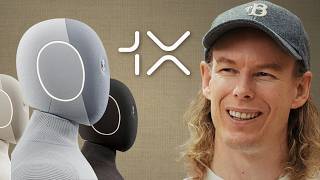
Dar Sleeper, head of product and design at 1X, discusses Neo’s design, manufacturing, and intended uses with Jon on Humanoid Mega Hub Live.
Dar Sleeper, vice president of design, product, and marketing at 1X, talks with Modern CTO host Joel Beasley about NEO, home robotics, and the path to shipping humanoids.
Sleeper says 1X’s “sanctuary” began as a place to check NEO’s finish, materials, and tolerances under lighting like a home. He and a colleague imagined it as the robot’s last stop on the factory line before heading out to customers.
Sleeper breaks laundry into steps: stairs, navigation, and carrying a basket are solved for NEO, while handling varied washers and small items such as dryer sheets remains difficult. The product can use shared autonomy, with a remote operator helping when the robot cannot complete a task itself. He says the first consumer shipments have not started, and 1X intends to ship its first NEO in 2026.
Sleeper describes how a world model can generate a motion plan from an instruction such as grabbing a cup, without first collecting repeated demonstrations of that exact action. He expects robots to detect failures, try again, and use their own successes and mistakes to improve. He says 1X achieved a capability it had expected to take longer by the end of the previous year.
Sleeper says home use can produce varied data that helps a robot generalize across tasks, unlike deployments focused on a narrow factory job. He also argues that safe operation around people is a demanding test, while consumer adoption can move faster than enterprise sales and deployment cycles.
Sleeper says the planned consumer NEO weighs almost 60 pounds and can carry close to 50 pounds. He describes its tendon-driven design as compliant and backdrivable, so people can move its limbs and physical contact is less forceful than with stiff, geared robots. He says that lightness also means a person could immobilize it.
Briefs summarise talks and interviews; timestamps open the video at that moment. Claims in a talk are the speaker's own.
Dar Sleeper, head of product and design at 1X, discusses Neo’s design, manufacturing, and intended uses with Jon on Humanoid Mega Hub Live.
Relentless host interviews Bernt Børnich, founder and CEO of 1X, about scaling humanoid robot manufacturing, learning from deployments, and building generally capable home robots.
Host and robotics analysts Scott Walter, Devang Adhyaru of the Humanoid Hub, Gustav, and Merdad examine 1X Technologies’ Neo hand and its mechanical design, demonstrations, and remaining uncertainties.
Melvin Tolliver IV, an integration technician at 1X, and colleagues at its Hayward factory describe assembling Neo, learning on the job, and the help they hope the robot will provide at home.
Bloomberg Originals host and narrator, with 1X founder Bernt Børnich, UC Berkeley professor Ken Goldberg, GXO’s Patrick Kelleher, and other robotics, industry, and labor experts, examines humanoid robots’ potential and the hurdles they face in factories, warehouses, homes, and hospitals.
Aaron Ames, a professor of mechanical engineering, answers audience questions about robotics on WIRED’s “Robotics Support.”