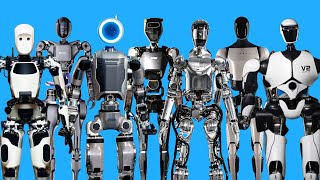
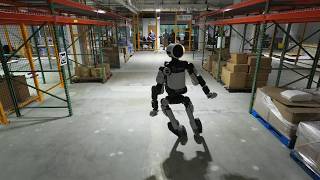
Faultline’s main speaker discusses Xiaomi’s humanoid robots on the company’s car factory floor and compares their progress with efforts by Figure, Hyundai, Tesla, and other manufacturers.
Xiaomi showed two humanoid robots sorting console side covers for eight hours, which it says covered that station’s daily output. The video labels the run autonomous and plays at 100 times speed, but gives no part count, success rate, human intervention log, or power details. The speaker places it in a sequence: a March trial, July improvements, then the November shift.
Xiaomi began making cars with the SU7, and its rapid production growth adds pressure to automate. China installed about 295,000 industrial robots in 2024, but most are fixed machines built for specific tasks. Xiaomi’s humanoids target flexible jobs between those stations, such as handling parts and moving them into position.
In March 2026, Xiaomi reported a robot placing nuts at a 76-second car cycle time, with 90.2% success over three hours. By July, that station reached 98%, while two others, including side-cover sorting, were around 90%. Xiaomi has not reported the November station’s accuracy or how often people intervened; the speaker says those figures are needed to judge reliability against a human qualification rate of about 99%.
Figure’s robots at BMW’s Spartanburg plant handled more than 90,000 parts over roughly 1,250 hours, while Hyundai plans to put Atlas to work in Georgia from 2028. Tesla has announced large production targets, but the speaker describes its public evidence of useful factory work as limited. Chinese firms including UBTech are also pursuing factory deployments, with customers such as BYD, Geely, and FAW-Volkswagen.
The speaker sees Xiaomi’s repeated factory trials as evidence of progress, while stressing that an eight-hour video is not a performance audit. Key milestones include publishing a full-shift scorecard, running three shifts, adding stations in the same plant, and reaching the human benchmark. The speaker predicts that by 2030 Xiaomi will use humanoids at several stations in each car factory.
Briefs summarise talks and interviews; timestamps open the video at that moment. Claims in a talk are the speaker's own.
Kalil 4.0 discusses humanoid robots for homes, factories, retail, and companionship, comparing emerging companies and their plans across the United States, China, Europe, and elsewhere.
Al Rizzi of the RAI Institute discusses machine learning for robot mobility and manipulation, including work with Boston Dynamics and examples presented at an IEEE Robotics and Automation Society event hosted by Kim.
A Boston Dynamics Prototype Operations team member explains how the company builds and improves Atlas, from precision machining through assembly and testing, alongside its engineers.