Geordie Rose, CEO of Sanctuary AI and founder of D-Wave and Kindred AI, discusses language models, minds and consciousness, quantum computing, and building general-purpose humanoid robots with Alex Conconi.
Rose describes ChatGPT as a statistical system trained to predict tokens, whose simple interface helped people notice how capable AI had become. He argues that fluent language can resemble thought without proving that a system understands the world or has a mind. He frames a mind more broadly as a system that takes in perceptions and produces actions.
Rose defines intelligence as the computational ability to pursue goals, so a system’s performance depends on which goals it is given. Sanctuary’s approach is to measure progress across portfolios of work tasks, which Rose sees as overlapping with human goals. He says current language models are not conscious, while the nature of first-person experience remains unresolved and may challenge scientific assumptions.
Sanctuary measures robot progress by how well systems complete work goals, improving performance through incremental changes. Rose says human-like hands matter because they carry out tasks such as sewing, typing, and sorting laundry. He distinguishes humanoid control from driving: the robot’s hands alone have 34 degrees of freedom, creating a much larger control problem.
Human operators control Sanctuary robots through a defined interface that transfers sensory input and movement commands. Rose says this lets the company deliver useful work before autonomous control is ready and collect examples for training software. The commercial plan is to deploy robots for paid labor, then lower costs and increase autonomy over time.
Rose says Sanctuary looks for tasks workers dislike and targets those first, arguing that automation can ease bottlenecks as well as staffing gaps. He cites 17 million unfilled jobs across G7 countries and estimates that robots serving those roles could generate $150,000 in annual recurring revenue apiece. He presents demographic change and advances in AI, robotics, and manufacturing as reasons automated labor may become increasingly necessary.
Briefs summarise talks and interviews; timestamps open the video at that moment. Claims in a talk are the speaker's own.
Geordie Rose, co-founder and CEO of Sanctuary AI, discusses humanoid robot autonomy, dexterous hands, and the economic and philosophical questions around automation with Jason on This Week in Startups.
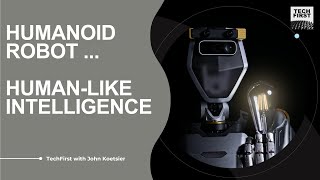
Geordie Rose, co-founder and CEO of Sanctuary AI, discusses the company’s Phoenix humanoid robot, its AI and hardware strategy, and its early commercial applications with John Koetsier on NEXT’s TechFirst.
Jeremy Fishel, principal scientist and researcher at Sanctuary AI, discusses dexterous hands and tactile sensing with Jeff Rick at the Humanoids Summit in Mountain View, California.
Suzanne Gildert, CTO of Sanctuary AI, discusses the company’s humanoid robot and its path toward general-purpose work with a Bloomberg Originals host in Vancouver.