Duggal says that automating human tasks in varied physical settings is a new challenge for AI. Vision-language-action models alone have not handled real industrial tasks well, and relying on video alone requires too much training data. The partners want robots to learn new tasks in under three hours.
NEURA’s executive describes a two-part approach: a model that understands tasks, plus fast neural networks that respond to touch and force. A robot could use fingertip feedback to grip a cup without dropping it, adjusting as the liquid shifts. These quick reactions help with changing conditions and reduce the need to slow down to compensate for model delays.
The executive argues that touch and force feedback can help skills work across different robot designs, since they need not depend only on precise visual knowledge of each device’s shape. Duggal also discusses using connected cameras and other devices to give robots useful information about their surroundings. The group describes edge processing and local networks as important where cloud delays are too long.
NEURA’s executive describes a three-level architecture: the nervous system, the brain and an extended brain that draws on information about the robot’s environment. NEURA Gyms recreate settings such as kitchens or industrial workspaces to train and evaluate robots. The executive says the goal is to make training data-efficient, with some tasks taking less than two hours, and accessible without specialist expertise.
Duggal points to Qualcomm’s work with Arduino and its community of more than 30 million developers as a way to put capable tools in more hands. The executive describes NEURAVERSE as a platform where companies can connect sensors to AI models, train and deploy them in secure environments, and keep private know-how to themselves. Both argue that progress depends on organizations building together rather than one company owning every solution.
Briefs summarise talks and interviews; timestamps open the video at that moment. Claims in a talk are the speaker's own.
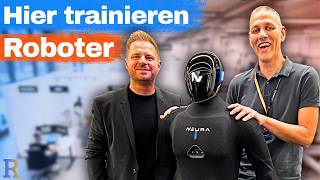
Jens Fischer, host of RoboSphäre, covers the opening of Neura Robotics’ robot training gym at Munich Airport with TUM, including remarks from Neura Robotics CEO David Reger and TUM representatives.
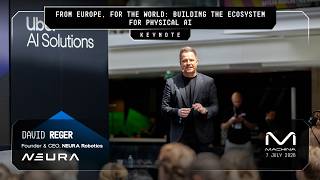
Neura Robotics founder and CEO David Reger explains his vision for physical AI and how the company is building robots, training tools and a shared platform at MACHINA 2026 with Machina Summit.
David Reger, founder and CEO of NEURA Robotics, discusses physical AI, robotics platforms, and open collaboration with John Furrier on SiliconANGLE theCUBE at Machina Summit in Paris.
Paolo Ardoino, CEO of Tether, discusses local physical AI, decentralized machine intelligence, and the potential for collaboration with NEURA Robotics in conversation with a NEURA Robotics host.
David Reger, founder and CEO of NEURA Robotics, discusses the company’s humanoid plans, physical AI, industrial uses and how robots may fit alongside human workers with the host of Automation Awakenings at NEURA’s headquarters.