The presenter says Neo uses a video model grounded in physics to visualize future actions, then applies them in the real world. The model is trained on web-scale video and post-trained on robot data to account for physical constraints and Neo’s body.
Users can prompt Neo by voice or text. For an orange-and-lunchbox example, the system generates visualizations of how to complete the task; Neo can run a generation automatically or let a user choose among parallel options.
The presenter claims Neo can handle objects and tasks without directly relevant examples in its data. They point to a toilet-seat task as an example of transferring human knowledge to a task Neo had not performed before.
The presenter contrasts the world model with robot AI models they describe as sensitive to lighting and random objects. They say Neo can use learned human knowledge to handle dynamic surroundings.
The presenter says the system still needs longer generated abilities and higher success rates. They describe a loop in which Neo generates data from its own real-world tasks and uses it to improve future capabilities.
Briefs summarise talks and interviews; timestamps open the video at that moment. Claims in a talk are the speaker's own.
Relentless host interviews Bernt Børnich, founder and CEO of 1X, about scaling humanoid robot manufacturing, learning from deployments, and building generally capable home robots.
Host and robotics analysts Scott Walter, Devang Adhyaru of the Humanoid Hub, Gustav, and Merdad examine 1X Technologies’ Neo hand and its mechanical design, demonstrations, and remaining uncertainties.
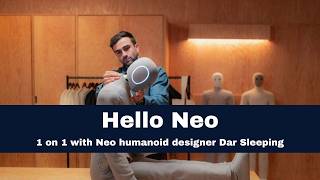
Dar Sleeper, vice president of design, product, and marketing at 1X, talks with Modern CTO host Joel Beasley about NEO, home robotics, and the path to shipping humanoids.
Melvin Tolliver IV, an integration technician at 1X, and colleagues at its Hayward factory describe assembling Neo, learning on the job, and the help they hope the robot will provide at home.
Bloomberg Originals host and narrator, with 1X founder Bernt Børnich, UC Berkeley professor Ken Goldberg, GXO’s Patrick Kelleher, and other robotics, industry, and labor experts, examines humanoid robots’ potential and the hurdles they face in factories, warehouses, homes, and hospitals.