Assessing a general-purpose robot model currently requires physical tests across many situations, potentially representing a lifetime of real-world experience. 1X presents its World Model as a way to connect simulated predictions with real robot behavior and make progress easier to measure.
The World Model predicts how the world will change after a robot acts, using raw sensory data from thousands of hours of robot interaction. It models examples including delicate-object grasping, rigid-body collisions, and objects deforming during handling.
1X says model quality improves as it adds data, especially examples where Neo encounters failures or unexpected outcomes. The model helps compare policies, including Redwood across tasks and environments, reducing evaluation cycles from weeks to minutes.
1X has explored web video, human first-person footage, and teleoperation, but identifies Neo's autonomous interaction with real environments as the most valuable data source. Neo attempts varied tasks and both succeeds and fails; its safety and compliance support sustained data collection in unstructured settings.
The World Model can also guide Neo's decisions by showing likely future states as it acts. Neo can use those predictions to plan, adjust its behavior, and respond to unexpected events.
Briefs summarise talks and interviews; timestamps open the video at that moment. Claims in a talk are the speaker's own.
Relentless host interviews Bernt Børnich, founder and CEO of 1X, about scaling humanoid robot manufacturing, learning from deployments, and building generally capable home robots.
Host and robotics analysts Scott Walter, Devang Adhyaru of the Humanoid Hub, Gustav, and Merdad examine 1X Technologies’ Neo hand and its mechanical design, demonstrations, and remaining uncertainties.
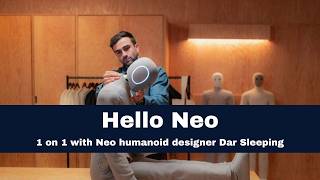
Dar Sleeper, vice president of design, product, and marketing at 1X, talks with Modern CTO host Joel Beasley about NEO, home robotics, and the path to shipping humanoids.
Melvin Tolliver IV, an integration technician at 1X, and colleagues at its Hayward factory describe assembling Neo, learning on the job, and the help they hope the robot will provide at home.
Bloomberg Originals host and narrator, with 1X founder Bernt Børnich, UC Berkeley professor Ken Goldberg, GXO’s Patrick Kelleher, and other robotics, industry, and labor experts, examines humanoid robots’ potential and the hurdles they face in factories, warehouses, homes, and hospitals.