
Sharpa· Sep 30, 2026
Introducing Sharpa
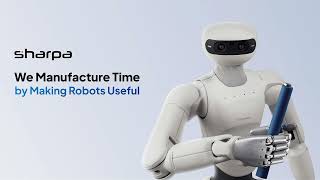
A Sharpa presenter introduces the company’s dexterous robot hands, CraftNet AI model, data strategy, and real-world deployments.
TAKASU Masakazu, host of Nico-Tech Shenzhen, reports from ROSCon China 2026 in Shenzhen on the robotics demos, developer tools, and embodied AI themes across the event.
TAKASU describes ROSCon China as a gathering for ROS developers, robotics engineers, and companies making hardware for research and development teams. The event began in 2014, and its large installations give the venue a festival feel.
Linkerbot and Inspire Robotics demonstrate dexterous hands, including vision-based motion tracking. GigaDevice presents robot-focused microcontrollers and six-axis sensors, while Elephant Robotics shows simulation tools and ROS-compatible platforms. SLAMTEC exhibits LiDAR and localization systems, and several companies display compact computers and AI boards for robots.
OpenROS presents a Linux-based robotics platform with links to HarmonyOS and other systems. Dexmal's Table30 project defines 30 tabletop manipulation tasks and publishes associated data and methods to help compare robot capabilities. RoboParty offers open humanoid designs, while OpenArm's public hardware files and parts lists have enabled multiple manufacturers to produce their own versions.
Sharpa shows a tactile-sensing hand and offers buyers a Linux SDK for simulation-to-real workflows. Enactic's OpenArm demo uses a master-slave setup to pick up thin paper, with an arm camera helping the operator follow the movement. TAKASU says the hardware documentation is public and reports a quoted price of about US$6,000 for a 6 kg-payload arm.
TAKASU says few presentations focused directly on ROS; many instead covered embodied AI, data production, vision-language models, and AI robotics. He highlights the value of major robot and component companies presenting directly to developers. He sees ROS as a continuing option for complex robotics applications and notes that different ROSCon events emphasize different topics.
Briefs summarise talks and interviews; timestamps open the video at that moment. Claims in a talk are the speaker's own.
A Sharpa presenter introduces the company’s dexterous robot hands, CraftNet AI model, data strategy, and real-world deployments.
A Google DeepMind main speaker explains how Gemini Robotics 2 aims to help robots handle varied physical tasks, including coordinated movement, dexterous manipulation, and teamwork between robots.
Scott Walter, a robotics engineer and advisor, joins Over The Horizon hosts and guests to discuss Sharpa’s Dairy Queen deployment, Mimic’s dexterous hand, and Sunday Robotics’ home laundry results.
A RoboParty Lab team member at RoboParty discusses building humanoid parkour motions with Party OS and the lab’s approach to physical AI research.
Shiao-Ju, who works on tactile sensing and related algorithms at Sharpa, presents at GTC 2026 on using tactile AI for high-degree-of-freedom dexterous manipulation.
Professor A. Fernando Ribeiro, associate professor at Universidade do Minho and RoboCup trustee, recalls Gerhard K. Kraetzschmar’s leadership and friendship in RoboCup and how he inspired young people through engineering outreach in Portugal and Leipzig.


