
Sharpa· Sep 30, 2026
Introducing Sharpa
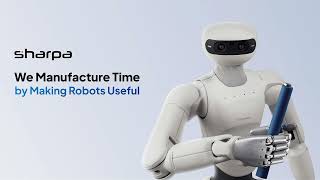
A Sharpa presenter introduces the company’s dexterous robot hands, CraftNet AI model, data strategy, and real-world deployments.
Scott Walter, a robotics engineer and advisor, joins Over The Horizon hosts and guests to discuss Sharpa’s Dairy Queen deployment, Mimic’s dexterous hand, and Sunday Robotics’ home laundry results.
Scott Walter says Sharpa is bringing its 22-degree-of-freedom Wave hand, mobile base, arms, and AI into a Shanghai Dairy Queen. The planned Blizzard-making task involves roughly 50 to 60 steps, including opening human-designed bins, using existing utensils, and holding a cup steady while mixing thick ice cream. The setup is designed to fit the store’s existing workspace and workflow, with disposable silicone hand covers and sleeves for food safety.
Walter explains that a dexterous hand can grip the cup firmly without crushing it, while a parallel-jaw gripper could slip or need excessive force. The robot must also track recipe steps, such as adding three scoops of Oreos, and follow them in order. The speakers describe the deployment as a way to support staff, who can still take over if automation goes down; the initial menu is expected to start with Oreo.
Mimic’s M1 hand is aimed at factory work on standard robot arms and cobots, including tasks such as fitting a gasket onto a door frame. Walter highlights the company’s five-finger U1 glove, designed to capture movements that map closely to the robot hand without major retargeting. The guests praise the tactile sensing and compliant fingers, while discussing whether later versions might add wrist movement.
The guests say AI-controlled cobots often move more slowly than people because of control update rates, actuator limits, accuracy needs, and vision processing. Teleoperation can also produce cautious training motions that are difficult to speed up afterward. By contrast, fixed production-line robots can move quickly when the task, object positions, and tooling are tightly controlled.
The hosts discuss Sunday Robotics’ claim that Act Two folded laundry with about 99% success in unseen homes without home-specific data. A guest says it is hard to assess the claim from staged videos and asks how the results could be independently validated. They also note the range of garments shown, including shirts and a baby’s onesie, and debate the different folding styles.
Briefs summarise talks and interviews; timestamps open the video at that moment. Claims in a talk are the speaker's own.
A Sharpa presenter introduces the company’s dexterous robot hands, CraftNet AI model, data strategy, and real-world deployments.
Rock of Over The Horizon talks with robotics designers Maharad Farmani and Scott Walter, and hand surgeon Gustav Anderson, about Sunday Robotics’ Mimo and its prospects for home and commercial work.
RoboStrategy head of research Scott Walter, an aerospace engineer and robotics-company co-founder, joins host Herbert to discuss Tesla Optimus V3’s design, production readiness, and remaining engineering challenges.
Host and robotics analysts Scott Walter, Devang Adhyaru of the Humanoid Hub, Gustav, and Merdad examine 1X Technologies’ Neo hand and its mechanical design, demonstrations, and remaining uncertainties.
Armin Foshnaughski of Munro & Associates, Schaeffler’s Al Mackie and Paul, and Scott Walter of RoboStrategy discuss the Unitree G1’s design and humanoid robotics during a Munro teardown.
Scott Walter joins The Humanoid Hub host to analyze Tesla’s Optimus hand and production plans, Figure’s robot output, and humanoid robots’ performance in the Beijing half marathon.


