IEEE Spectrum· Jun 30, 2025
New Humanoid Robot from Fourier Intelligence
Victor Suen of Fourier Intelligence introduces the company’s GR-1 humanoid robot and discusses its origins, intended uses, technical focus, and open platform.
Peter, a robotics engineer at NVIDIA, explains Isaac GR00T-Mimic’s synthetic motion generation workflow with NVIDIA Omniverse hosts Eric and Edmar and other guests.
The presenters distinguish imitation learning, which learns from demonstrations, from reinforcement learning, which learns through rewards and trial and error. Human demonstrations can be costly to gather at scale, so the session introduces simulation as a way to expand training data. GR00T-Mimic is part of NVIDIA’s broader GR00T platform and runs within Isaac Lab.
The workflow uses a small set of human demonstrations to generate new motion trajectories for manipulators and humanoids. It splits demonstrations into subtasks, finds a suitable example for a new scene, transforms its motion, and interpolates between movements. Isaac Lab then checks the generated trajectory and keeps successful results.
Users record demonstrations with devices such as a SpaceMouse, gamepad, leader arm, or Apple Vision Pro, then mark subtask boundaries manually or automatically. Peter describes a Franka cube-stacking example that expanded 10 human demonstrations into 1,000 trajectories. On a 4090, generation for that task could take roughly 30 minutes to a couple of hours, depending on the policy and rendering.
Peter recommends using as few subtasks as the task allows, since each transition adds interpolation and can make motion less smooth. Action noise can lower generation success but help policies handle small deviations; interpolation steps also need tuning for the task. The session then previews combining Mimic trajectories with NVIDIA Cosmos to vary scene appearance, such as lighting, textures, and backgrounds.
Peter says Isaac Lab includes the Mimic workflows and a tutorial spanning data collection, annotation, generation, and policy training. Guests point viewers to Isaac Lab documentation and GitHub for support, and discuss using robots such as the Fourier GR-1, Franka, UR arms, and other platforms with suitable models and task-space controllers. The presenters also describe future work connecting Mimic data to GR00T N1 fine-tuning.
Briefs summarise talks and interviews; timestamps open the video at that moment. Claims in a talk are the speaker's own.
Victor Suen of Fourier Intelligence introduces the company’s GR-1 humanoid robot and discusses its origins, intended uses, technical focus, and open platform.
Toru, a UC Berkeley PhD student working with Jitendra Malik, discusses vision-based sim-to-real reinforcement learning for humanoid manipulation with RoboPapers hosts.
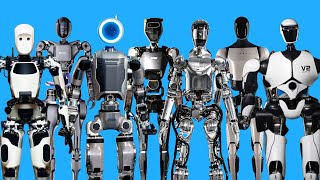
AI Search host discusses the humanoid robot race, comparing companies’ capabilities, demonstrations, and progress toward real-world deployment.
CNBC examines Nvidia, Jensen Huang’s reported relationships and leadership, the company’s path from PC graphics to AI computing, and the business and geopolitical risks facing the company.
NVIDIA describes its UK history and current AI work, including drug discovery, robotics, and AI factories across the United Kingdom.
NVIDIA founder and CEO Jensen Huang presents the company’s AI strategy and product announcements at GTC Berlin, with European partners and customers.