Neil Gershenfeld, director of MIT’s Center for Bits and Atoms, talks with Lex Fridman on the Lex Fridman Podcast about digital fabrication, self-replicating robots, and how making can connect computation with physical materials.
Gershenfeld argues that computing cannot be fully separated from the materials and devices that store and process information. He says the classic models associated with Turing and von Neumann overlook how information moves between storage and processing, and points to quantum computing and synthetic biology as fields where computation is embodied.
Gershenfeld describes digital materials as reusable, discrete parts that join through local constraints, like LEGO bricks. His lab used linked carbon fiber loops to make a lightweight, high-modulus material, then explored robots that walk on structures and build them. He says the robots can assemble more robots from the parts they are already placing, building capacity for larger structures.
Gershenfeld describes a network of about 2,500 Fab Labs in 125 countries, alongside MIT’s How to Make Almost Anything course. Student projects included a device that records and later releases screams, and a dress that defends personal space. He says the labs let people express ideas by making objects, and that the same creative ability appears in communities around the world.
Gershenfeld compares Fab Labs to early minicomputers and describes a progression from computer-controlled tools to machines that make machines, then to robotic assemblers. He sees local production and reusable parts as ways to reduce supply chains and technical waste. He also says biotechnology risks are serious and argues that open labs can encourage transparency and community support.
Gershenfeld says complex systems may need to be designed through developmental processes, drawing on how genes guide growth rather than storing a finished body plan. He connects this idea to AI representations and to fabrication that can grow, adapt, and evolve. For people who want to participate, he points to Fab Academy and local Fab Labs.
Briefs summarise talks and interviews; timestamps open the video at that moment. Claims in a talk are the speaker's own.
Jensen Huang, NVIDIA’s CEO and founder, joins Lex Fridman in Taiwan during Computex to discuss the island’s engineering ecosystem, NVIDIA’s partnerships and AI infrastructure, and the value of cooperation amid competition.
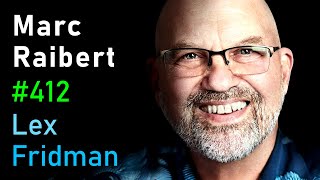
Marc Raibert, founder of Boston Dynamics and executive director of the Boston Dynamics AI Institute, talks with Lex Fridman on the Lex Fridman Podcast about legged robotics, robot intelligence, and the work ahead.
Boston Dynamics CEO Robert Playter talks with Lex Fridman about legged and humanoid robotics, the company’s path from research to commercial products, and how robots may work alongside people.
Inventor, designer, engineer, and roboticist Simone Giertz talks with Lex Fridman on the Lex Fridman Podcast about creative engineering, product design, robotics, illness, and building a career around enthusiasm.