NEXT with John Koetsier· Sep 18, 2026
RoboStrategy CEO: humanoid robots a $10 trillion industry
Andrew King, CEO of RoboStrategy, discusses humanoid robotics and investment with John Koetsier on NEXT.
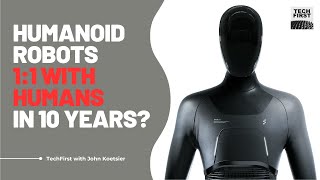
Peter Diamandis, founder of XPRIZE and co-founder of Singularity University, discusses humanoid robots with John Koetsier on NEXT, which Koetsier introduces as TechFirst.
Diamandis says AI, computing, batteries, sensors, materials and communications are converging to make useful robots possible. His Q4 2024 report counted about 100 reasonably or well-funded humanoid robotics companies, including 16 major players it examined. He says the field is changing quickly and expects the list to grow.
Diamandis estimates a $20,000 to $30,000 robot could cost about $300 per month to lease, or roughly 40 cents per hour. He predicts beta versions for homes by the end of 2026 and wider use by the end of the decade. He and Koetsier discuss potential benefits in understaffed work and care, alongside job displacement, economic changes, and the importance of purpose and meaningful challenge.
Diamandis argues that a humanoid form lets robots use spaces and tools already designed for people, such as stairs, doors and hand drills. Koetsier suggests multiple specialized robots could work together when one robot needs more capability, such as extra arms in a kitchen. Diamandis expects AI to help design future robot generations, with robots eventually building robots.
Diamandis names Figure and Tesla's Optimus as leading contenders, and also highlights Apptronik, Agility Robotics, Boston Dynamics, Unitree and Engineered Arts' Ameca. He describes different software strategies, from tightly integrated systems to robots that can use different language models, and says fleets can share what individual robots learn. He also points to China's manufacturing ecosystem and demand for labor as advantages, and discusses 3D printing parts on demand.
Diamandis says a large robot fleet could share experience when one robot encounters something new. He uses surgery as an example, arguing that a robot could draw on the results of many procedures and perform tasks with steady hands. Koetsier mentions a brain implant procedure in which a robot inserted electrodes after a human surgeon prepared the patient.
Briefs summarise talks and interviews; timestamps open the video at that moment. Claims in a talk are the speaker's own.
Andrew King, CEO of RoboStrategy, discusses humanoid robotics and investment with John Koetsier on NEXT.
Matt Gilbert, AI and data director at Synapse, discusses the state and future of physical AI with Jonas on Tech First.
VC investors Jesse Coors and Greg Hill discuss Figure AI’s humanoid robot and its potential uses and timeline with John Koetsier on NEXT.
Scott Walter joins The Humanoid Hub host to analyze Tesla’s Optimus hand and production plans, Figure’s robot output, and humanoid robots’ performance in the Beijing half marathon.
Robotics enthusiast Kevin Wood, who works in robotics and AI and runs a YouTube channel, discusses humanoid design and recent robot news with Devin on The Humanoid Hub.
Scott Walter, robotics expert and self-described humanoid bot evangelist, discusses humanoid robotics news with The Humanoid Hub host on the podcast.