A Fourier Intelligence representative discusses rehabilitation and personal use exoskeletons with the Exoskeleton Report host at WearRAcon 2017 in the United States.
Fourier’s X1 uses a wired remote so a therapist can monitor its status. The representative says doctors suggested joint LEDs to show how actively a patient is training, with brightness and color reflecting motor strain.
The M2 uses servo motors to simulate an object’s resistance and mass. The X1 applies related haptic control in reverse: it detects a patient’s force and assists at the hip or knee. The M2 is for the upper limb, while the X1 supports the lower limb.
Fourier says it began designing rehabilitation robots eight years earlier, starting with a fixed lower-limb gait trainer for people with stroke or spinal cord injuries. Because those machines were large and made wheelchair transfers difficult, the company developed lighter exoskeletons. For home use, the representative points to complex environments, gait data, understanding user intent, and balance as challenges.
The representative describes China’s rehabilitation market as growing by 20–40% and says Fourier sees companies such as ReWalk and Ekso as peers in a market that needs broader education. Fourier came to the U.S. to learn from experienced companies and exchange research and market knowledge, while also sharing information about China.
The representative says interest from Chinese officials and the public is growing, citing a visit to the booth by Shanghai’s mayor. They estimate that more than 10 million people in China cannot work and argue that exoskeletons could provide social value by reducing costs associated with disability. Fourier also hopes more Chinese companies will attend WearRAcon and invites conference members to Shanghai and Beijing.
Briefs summarise talks and interviews; timestamps open the video at that moment. Claims in a talk are the speaker's own.
PRO ROBOTS’ presenter reviews humanoid robots and AI systems showcased at WAIC 2026 in China, including demonstrations from AGIBOT, Fourier Intelligence, No Matrix, and others.
Kalil 4.0 discusses humanoid robots for homes, factories, retail, and companionship, comparing emerging companies and their plans across the United States, China, Europe, and elsewhere.
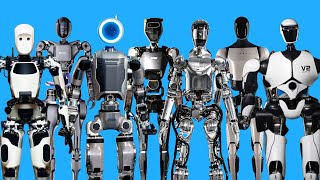
Victor Suen of Fourier Intelligence introduces the company’s GR-1 humanoid robot and discusses its origins, intended uses, technical focus, and open platform.