LUKE Arm
CommercialActive since 2008
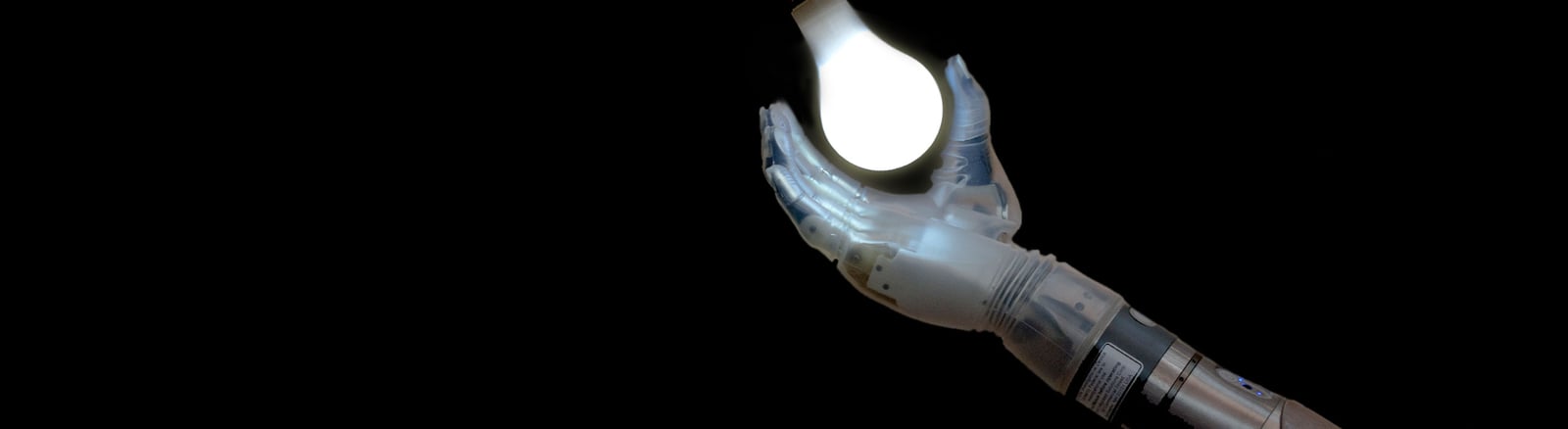
Commercially available prosthesis with a powered shoulder and up to 10 powered joints.
- Weight
- 4.7 kg
- Degrees of freedom
- 10
About
The LUKE Arm began as a prosthetic arm program associated with DEKA Research and later moved toward commercial availability through Mobius Bionics LLC. Its design was intended to restore multiple degrees of powered movement in an upper-limb prosthesis, including shoulder integration in some configurations and a high number of actuated joints for users with shoulder disarticulation or higher-level limb loss.
The system became known publicly through years of development, clinical testing, and regulatory review in the United States. Mobius Bionics later commercialized the arm, positioning it as a multi-function prosthesis for selected amputees who needed powered control across several joints. The LUKE Arm remains a specialized medical device rather than a mass-market robot, and its history is tied to the broader evolution of advanced myoelectric prosthetics.
Specifications
Body
- Weight
- 4.7 kg
- Degrees of freedom
- 10
- Fingers
- 5
Motion
- Motor tech
- powered joints; powered thumb, index finger, middle/ring/pinky fingers
Sensing & Compute
- Connectivity
- wireless charging pad
- Tactile / force sensors
- Sensors in the thumb can activate vibratory feedback; tactor mounted to socket.
Safety & Market
- Ingress protection
- IMUs are sealed and waterproof
- Primary market
- prosthetics
- Availability
- Commercial
Timeline4
- 2017-12-01 · release~LUKE Arm reaches commercial market
The LUKE Arm becomes commercially available in the United States through Mobius Bionics.
- 2015-05-01 · announcement~Mobius Bionics forms to commercialize arm
Mobius Bionics is established to bring the LUKE Arm to market.
- 2014-03-01 · milestone~FDA approves early trial use
The U.S. Food and Drug Administration allows clinical use of the DEKA Arm system under humanitarian device provisions.
- 2008-01-01 · milestone~DEKA reveals Luke arm concept
DEKA publicly discusses the prosthetic arm concept that later becomes known as the LUKE Arm.