Founded in 2011 around robotics research, Rainbow Robotics supplied its Hubo humanoid to major research organizations and partnered with global IT firms. Its 2015 DARPA Robotics Challenge participation helped demonstrate Korean robotics capabilities and supported growth in high-reliability markets.
The company’s appearance at the PyeongChang Winter Olympics showcased its robots, while the RB collaborative robot line moved Rainbow Robotics into industrial automation. It cites quality certifications, industrial projects, a 2021 KOSDAQ listing, a 2023 American subsidiary, a mobile dual-arm robot, aerospace work and its acquisition by Samsung Electronics.
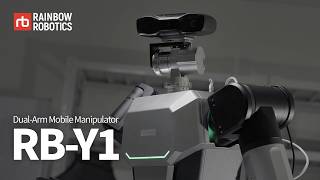
Rainbow Robotics describes developing humanoid, collaborative, dual-arm, mobile and quadruped robots, alongside precision-control capabilities. It says it built core components and control technology in-house to improve stability, flexibility and the range of real-world applications.
Speakers describe starting with a small team and aiming to create a leading four-type robot platform. They emphasize product quality, customer service and “K-Standard” value amid competition from Chinese manufacturers, and argue that leadership should make room for many contributors.
The company presents robotics as a way to automate repetitive work, reduce exposure to hazardous conditions and raise productivity across logistics, healthcare and services. For 2026, it says it is preparing organizational expansion and a new direction built around a physical AI platform.
Briefs summarise talks and interviews; timestamps open the video at that moment. Claims in a talk are the speaker's own.
Rick Yoonhyuk Jang, Chief Robotics Officer at Rainbow Robotics, presents the company’s path from humanoids through industrial robots and back toward humanoid platforms at the Humanoids Summit.
경제 알려주는 고양이 examines Rainbow Robotics’ rise from KAIST’s HUBO project to Samsung’s largest-shareholder deal, tracing the company’s robotics, component manufacturing and business challenges.
A Zoom Vantage presenter discusses South Korea’s robotics landscape, from humanoid systems and research platforms to robots used in industry and public life.