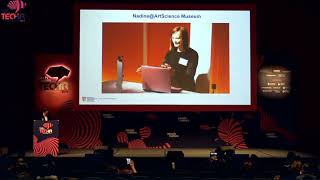
Sinan, a CNBC International multimedia journalist, moderates Slush Singapore’s panel with AI consultant Ayesha Khanna of ADDO AI, social robotics researcher Nadia Thalmann of NTU, and Jacqueline of Prophet on AI ethics, robots, and practical opportunities for businesses.
Ayesha Khanna argues that teams need people who can explain AI decisions in accessible terms, especially when models affect customers. She raises the example of using a person’s walk, captured through an iPhone app, to assess creditworthiness or potentially influence health insurance. She says people should understand how such decisions are made, and points to the EU’s GDPR as a catalyst for discussion.
Nadia Thalmann describes Nadine as able to recognize people, converse, interpret speech and emotion, and respond using AI methods. But she says social robots still cannot understand that they are on a panel or fully recognize and engage with unfamiliar people at once. Robots also lack self-awareness, while understanding people and objects in their surroundings remains a research challenge.
For startups in finance, Ayesha recommends looking into Singapore IMDA grants and AI Singapore’s TechSkills Accelerator, which she says can cover 70 to 80 percent of an apprentice’s cost for nine months. She advises testing for returns within 10 to 12 weeks using accessible data. Jacqueline recommends learning what financial firms need and improving specific customer experiences, noting that complex infrastructure can make integration slow; one project she discusses is expected to take a year to launch.
Nadia frames AI’s existential risk around what people consider human: robots may outperform people at reasoning, but she says they do not have human experiences such as love, dreams, or desire. She sees robots as potential partners, including for elder care and companionship. Jacqueline warns that speech tools can also be misused to fabricate a person’s voice and says transparency and governance matter alongside room for startups to innovate.
Jacqueline sees China as a major AI power, pointing to its digital commerce landscape and cashless payments. She also expects voice agents and virtual assistants to become more common, citing Google Assistant and OCBC Bank’s voice banking. The panel closes with three perspectives: learn enough data science to understand AI, recognize that it is already part of daily life, and treat it as a chance for Asian businesses to gain an edge.
Briefs summarise talks and interviews; timestamps open the video at that moment. Claims in a talk are the speaker's own.
A Nanyang Technological University presenter discusses human-robot interaction through Nadine, a social robot developed by Professor Nadia Thalmann, with examples from research and public-facing roles.