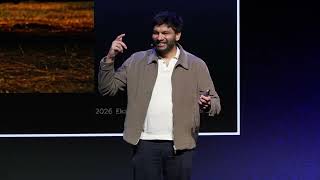
Agrawal contrasts robots that move cautiously with animals like cheetahs, whose running often involves brief or no ground contact. He points to fixed gaits, limited vision, assumptions about foot slip, and hardware design as possible constraints on speed and agility.
Agrawal describes training robot policies through trial and error in simulation, then transferring them to physical robots. For gap crossing, the team used a simulated height-map policy as a teacher and trained a student to act from depth images. Allowing the policy to choose foot contacts as well as velocity helped it cross larger gaps; simulation reached about 1.5 times the robot’s body length, while early real-world trials crossed gaps up to 26 centimeters.
Agrawal explains that differences between simulation and reality, including friction and motor dynamics, can reduce performance. Domain randomization improves robustness but may lower peak performance. A student policy that learns from state and action histories can infer information relevant to control, and online system identification improved real-world speed from about 2.5 to 3.8 meters per second over three episodes.
Agrawal describes work spanning control, perception, and hardware, including prosthetic-inspired robot feet and simulated training for dexterous manipulation. A hand trained to reorient objects was evaluated on objects it had not seen before and transferred to a real setup using a camera. He closes with a longer-term goal of combining learned skills such as navigation and manipulation to support language-directed tasks.
Briefs summarise talks and interviews; timestamps open the video at that moment. Claims in a talk are the speaker's own.
Pulkit Agrawal, co-founder and CEO of Aether Robotics and an MIT professor, discusses how force-aware learning could make robot manipulation both fast and general at Foxglove’s Actuate 26.